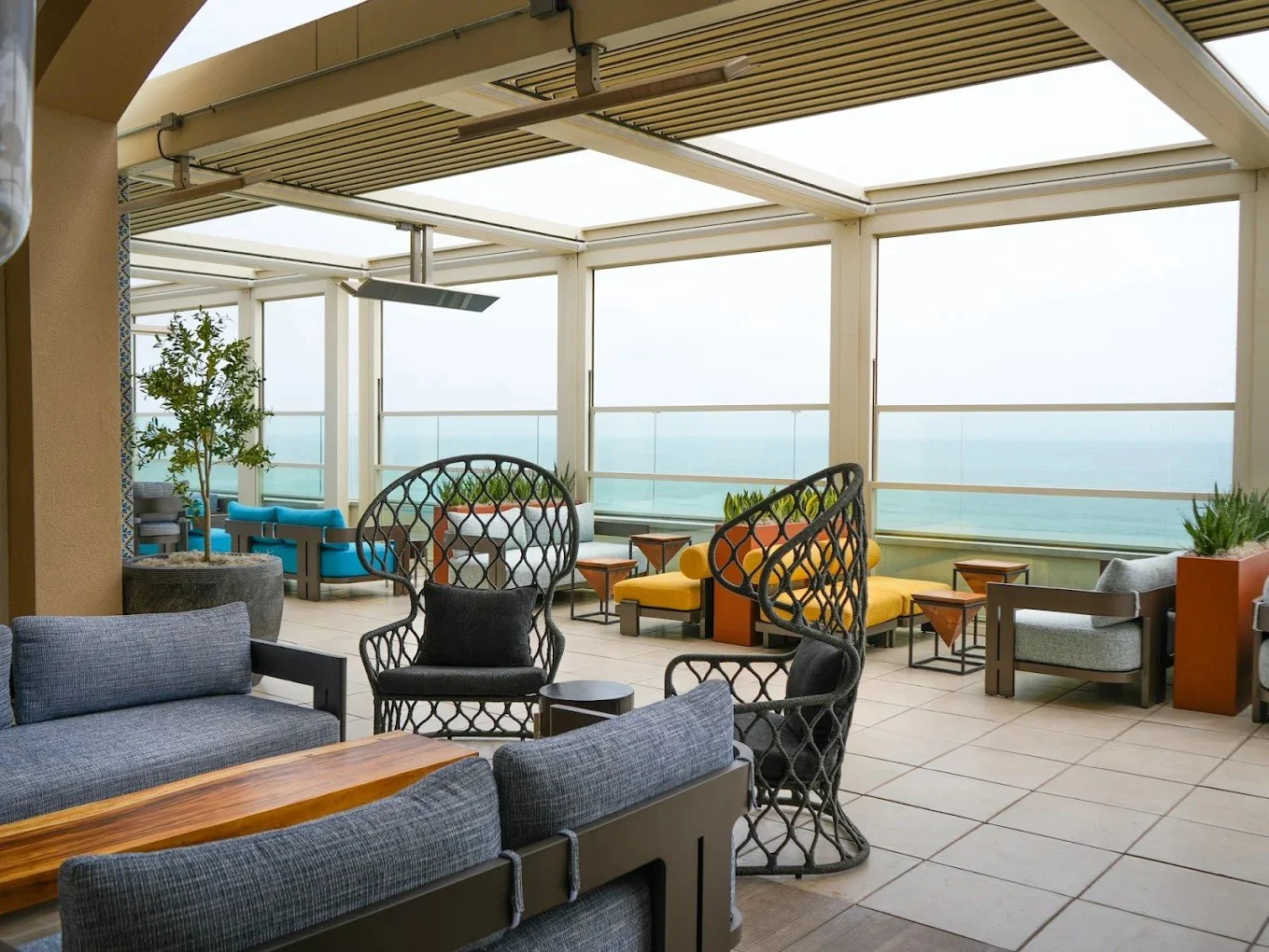
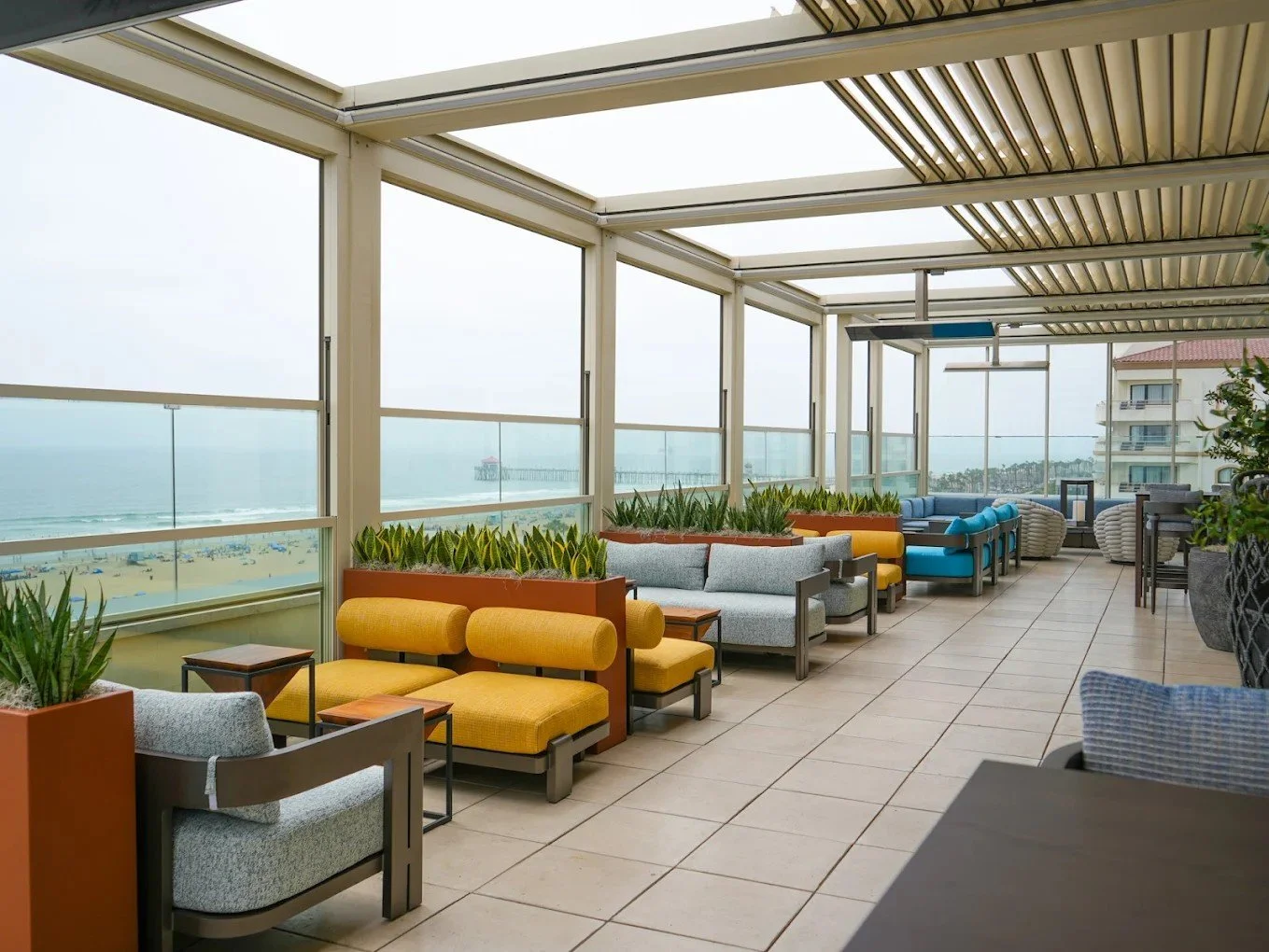
Adaptive Outdoor Architecture
Why AdapTive Envelopes Work
They work because they improve the Gathering Performance of Outdoor Signature Spaces—not by fighting the environment, but by adapting to it.
The Adaptive Principle
Comfort Creates
Gathering Performance.
People stay where they feel good. AdapTive Envelopes work because they continually adjust the architectural environment as conditions change— preserving comfort, openness, and the reasons people chose to gather outdoors.
Adaptation preserves the gathering.
The goal is not simply to protect people from weather. It is to keep the gathering worth staying for.
AdapTive Envelopes continually manage sun, glare, wind, rain, temperature, airflow, openness, and ambiance—allowing the space to respond without losing the outdoor experience that drew people there in the first place.
As conditions change, the architecture changes with them. Comfort is preserved not by enclosing the space permanently, but by giving the environment the ability to adapt.
Architectural Coordination
Coordinated Systems Create Predictable Performance.
An AdapTive Envelope is not a single product. It is an architectural environment made possible by multiple adaptive systems working together. Each contributes a different responsibility, but their value comes from operating as one coordinated composition rather than as isolated components.
One Environment. Multiple Responsibilities.
No single system creates an adaptive environment.
Roof systems manage overhead conditions. Glass systems manage environmental transition. Shading moderates solar exposure. Environmental controls coordinate every response.
Together they create architecture capable of adapting as one unified system rather than a collection of independent products.
Environmental Control
Continuously manages sunlight, shade, airflow, temperature, rain, and comfort while preserving openness.
Spatial Adaptation
Allows spaces to open, enclose, expand, or transform as activities, occupancy, and weather evolve.
Environmental Transition
Creates a gradual relationship between interior and exterior environments instead of an abrupt boundary.
Operational Flexibility
Supports changing guest experiences, dayparts, seasons, and programming without rebuilding the space.
Architectural Integration
Integration Makes Adaptation Invisible.
Adaptive systems should never compete for attention. The most successful environments feel natural because the technology disappears into the architecture, allowing people to experience the place rather than the systems that quietly preserve it.
Great architecture is remembered.
Guests rarely remember a roof motor. They remember staying outside through sunset.
They remember the conversation, the celebration, the meal, and the experience. Adaptive technology succeeds when it quietly preserves those moments instead of becoming the focus.
The responsibility of an AdapTive Envelope is not to showcase technology—it is to make remarkable outdoor experiences feel effortless.
Invisible Technology
Systems support the experience without becoming its focal point.
Unified Architecture
Roofs, walls, shading, lighting, and environmental controls behave as one architectural composition.
Intuitive Operation
Complex environmental responses become effortless for operators and invisible to guests.
Consistent Experience
People remember the gathering—not the mechanisms that protected it.
Long-Term Adaptability
Adaptability Protects Long-Term Value.
Buildings are designed to last for decades. Guest expectations, operations, climates, and business models rarely do. Adaptive architecture allows a property to evolve without continually rebuilding the environments people value most.
Great properties never stop adapting.
The most valuable outdoor environments are not those that perfectly solve today's needs. They are prepared for tomorrow's.
As guest expectations evolve, operations change, seasons shift, and technology advances, adaptive architecture continues responding without asking the building to begin again.
Long-term value is created when architecture remains relevant rather than becoming obsolete.
Operational Resilience
Spaces remain effective as staffing models, service styles, and programming evolve.
Future Readiness
New technologies and environmental capabilities can be incorporated without abandoning the original architecture.
Investment Protection
Adaptive environments continue delivering value long after conventional outdoor spaces begin showing their limitations.
Lasting Relevance
Architecture that continues adapting continues serving guests, operators, and owners for decades.